From the Feed to the Screen: When TikTok Ghost Hunters Became Hollywood's Scariest Resource
Somewhere in America right now, someone is walking through a dark building with a phone camera, whispering to an audience of several hundred thousand people. They're asking questions into the void. Something moves. The comments section explodes. The clip gets reposted, stitched, and debated for the next 48 hours across every platform that exists.
This is the paranormal content economy, and it is enormous. And increasingly, it's not staying on your phone. It's walking directly onto film sets.
The pipeline from viral ghost hunting content to mainstream horror production has become impossible to ignore. Studios are hiring paranormal creators as consultants. Independent filmmakers are optioning real ghost hunting footage as source material. Actors are being cast based partly on their existing paranormal followings. The line between the amateur and the professional, between the documentary and the fictional, has blurred in ways that are genuinely reshaping what American ghost cinema looks like.
How the Pipeline Actually Works
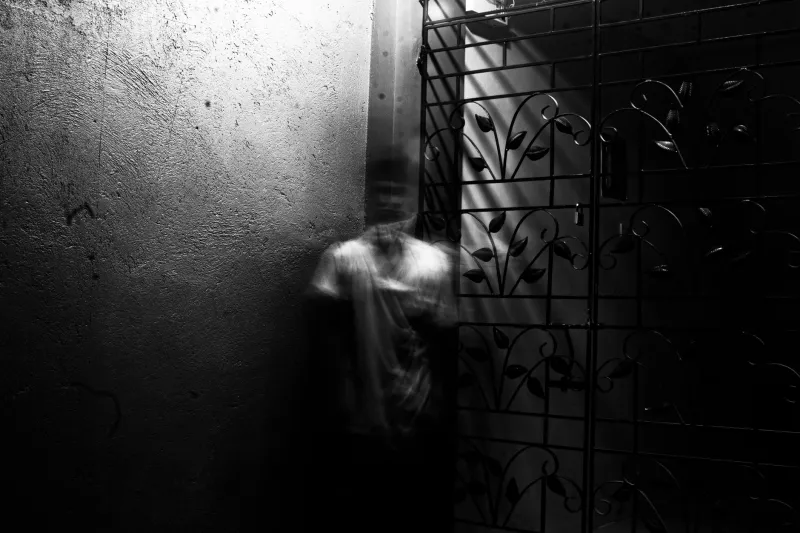
It starts, usually, with a moment that can't quite be explained. A figure in a doorway. A voice on an audio recorder that nobody in the room made. An object moving with no visible cause. The creator posts it. The algorithm picks it up. The clip goes viral.
What happens next is where it gets interesting. Production companies and development executives have increasingly built social listening into their early-stage research processes, monitoring paranormal content channels for footage, stories, and creators whose audiences are already primed for supernatural horror. It's market research that also happens to be, occasionally, genuinely creepy.
Jordan Voss, a paranormal content creator based in the Midwest with roughly 800,000 followers across platforms, described getting a direct message from a production company within 48 hours of a particularly viral investigation clip. "They wanted to know if the footage was real, if I had more, and whether I'd be interested in consulting on a project," Voss said. "I'd been doing this for three years and nobody from the film industry had ever reached out. One clip and suddenly I had two conversations going."
This pattern is becoming common enough that some creators have started treating their content explicitly as a portfolio for industry attention — not just building an audience, but building a professional case.
Authenticity vs. Performance: The Uncomfortable Question
Here's where Ghostheads has to be honest about the tension in all of this. The thing that makes paranormal content compelling — the reason it generates the engagement it does — is the possibility that it's real. The creator's genuine fear response. The unexplained audio that nobody planned. The moment where the camera catches something and the creator's voice goes quiet because they're actually scared.
The moment that authenticity becomes a strategy, something shifts.
Several established ghost hunting creators have been candid, in podcast interviews and convention panels, about the pressure to manufacture compelling moments when investigations come up empty. An empty building with nothing happening is a bad video. An empty building where the creator performs escalating anxiety until something — anything — happens is a watchable video. The performance of fear and the experience of fear start to bleed together.
Filmmakers who've worked with paranormal creators as consultants have noticed this. One director, speaking generally about the consultation process, noted that creators who'd built large audiences were sometimes less useful as authenticity resources than smaller creators who hadn't yet learned to perform for an audience. "The big accounts know how to make something feel scary on camera," she said. "That's actually a different skill set than knowing what's genuinely disturbing."
What Creators Are Actually Bringing to Production
Set aside the philosophical debate for a moment and look at the practical contributions, because they're real and they're meaningful.
Paranormal content creators who've worked on or adjacent to professional productions tend to bring three things that are genuinely hard to replicate through traditional development processes.
First, location knowledge. Creators who've spent years investigating specific types of spaces — abandoned hospitals, former correctional facilities, historic hotels — carry detailed, experiential knowledge of how those environments actually behave. The sounds they make at night. The way light moves through them. The specific quality of unease that a particular kind of space generates. That's production design intelligence that can't be easily Googled.
Second, audience calibration. Creators with large paranormal followings have effectively been running continuous audience research for years. They know, based on direct engagement data, what their viewers find genuinely unsettling versus what produces a cheap reaction. That's information that horror productions spend significant money to gather through test screenings.
Third, and maybe most interestingly — genuine documented weirdness. Not all of it is explainable. Some creators have footage that hasn't been satisfactorily debunked, audio recordings that audio engineers have examined without conclusion, and physical evidence from investigations that remains anomalous. Whether you believe in ghosts or not, that material has creative and atmospheric value.
Is This Making Horror Better?
The honest answer is: sometimes, and it depends entirely on how the collaboration happens.
When filmmakers engage with paranormal creators as genuine subject matter experts — listening to their location knowledge, drawing on their audience intelligence, treating their documented experiences as legitimate creative source material — the results tend to add texture and specificity to the final product. The horror feels grounded in something real, even if that real thing is the specific quality of fear a particular kind of place generates.
When studios engage with creators primarily because of their follower counts, treating them as marketing assets rather than creative resources, the results tend to be exactly as shallow as you'd expect. The creator gets a cameo or a consulting credit. The film doesn't actually absorb anything meaningful from the collaboration. Everyone gets a press release out of it.
The paranormal content world has produced some genuinely compelling documentation of human fear responses, some fascinating location work, and a few creators who are, by any reasonable measure, skilled storytellers operating in an unusual medium. The horror genre would be smart to engage with that seriously rather than just mining it for aesthetic credibility.
The dead, as we keep saying around here, are coming. Some of them are posting about it first.