Born Scared: Why the Year You Were Born Decides Which Ghosts Get Under Your Skin
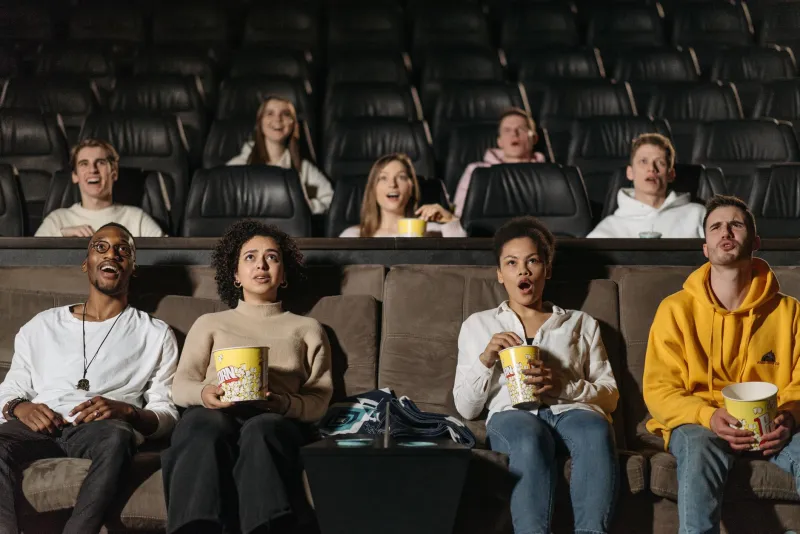
Ask a Baby Boomer what scared them at the movies and you'll probably hear about The Exorcist or Poltergeist — malevolent forces invading the domestic space, disrupting the nuclear family, threatening everything that was supposed to be safe and stable. Ask a Millennial and the conversation shifts toward The Ring, Paranormal Activity, or Insidious — ghosts that feel less like invaders and more like symptoms of something already broken. Ask someone from Gen Z and they'll probably bring up Hereditary or The Haunting of Bly Manor — stories where the ghost is almost sympathetic, where the haunting is really a metaphor for inherited trauma and systems that were already failing before anyone showed up with a candle.
This isn't coincidence. The ghost movies that genuinely terrify us are deeply tied to the specific anxieties, cultural wounds, and collective memories of the generation that lived through them. At Ghostheads, we find that relationship between history and horror absolutely fascinating — so let's break it down.
Boomers: The Ghost as Invader
The Baby Boom generation came of age in an era defined by two contradictory cultural forces: the promise of American prosperity and the constant low hum of existential threat. Cold War anxiety, the Vietnam War, the assassination of national figures who represented optimism — Boomers grew up understanding that stability was fragile and that the institutions meant to protect you might not hold.
The ghost movies that resonated with this generation reflected exactly that. The haunted house — specifically the suburban or middle-class American home — became the dominant horror setting. The Amityville Horror, Poltergeist, The Shining. The fear was external invasion. Something from outside, something ancient and malevolent, choosing your house, your family. The horror lay in the violation of a safe space that was supposed to be earned through hard work and right living.
Box office data from the 1970s and 1980s consistently shows these films performing strongest in markets with higher concentrations of homeowning families — audiences who had literal skin in the game of domestic safety. The ghost wasn't a metaphor for them. It was a direct threat to everything they'd built.
Gen X: The Ghost Nobody Believed
Generation X grew up watching their parents' certainties collapse — Watergate, stagflation, the AIDS crisis, the slow unraveling of the institutions Boomers had trusted. The dominant Gen X horror posture is skepticism, and their ghost movies reflect it.
Think about The X-Files phenomenon, or the found-footage explosion that kicked off in earnest with The Blair Witch Project in 1999. Gen X didn't want to be told the ghost was real. They wanted to find out for themselves, document it, argue about it. The horror was partly the supernatural threat and partly the feeling that even if you had proof, no one in authority was going to take you seriously.
Psychological research on this cohort's media consumption patterns consistently flags themes of institutional distrust and self-reliance. The Gen X ghost story is frequently a story about being right about something terrible and being ignored anyway. That's a specific, generational kind of dread.
Millennials: The Ghost as Anxiety Manifest
Millennials are, statistically speaking, the most analyzed generation in American history, and their relationship with horror is no exception. What the data shows is striking: Millennial audiences respond most strongly to supernatural horror where the threat is ambiguous, persistent, and tied to the protagonist's mental state.
Paranormal Activity — shot for roughly $15,000 and grossing nearly $200 million worldwide — became a cultural phenomenon precisely because it staged its haunting inside an ordinary apartment, targeting young people just trying to live their lives. No grand Victorian estate. No ancient curse. Just something wrong that you couldn't explain, document, or escape, even in your own bedroom.
Social media analysis of Millennial horror engagement consistently surfaces language around anxiety, burnout, and the feeling of being watched or tracked. The ghost in Millennial horror is frequently invisible, systemic, and exhausting rather than dramatically terrifying. It doesn't want to possess you. It just wants to make every day a little harder to get through. Sound familiar?
Gen Z: The Ghost With a Backstory
Here's where it gets genuinely interesting. Gen Z's relationship with supernatural horror represents a meaningful break from previous generations — not in intensity, but in orientation. Where older generations feared the ghost, Gen Z increasingly wants to understand it.
The viral success of films like Hereditary, Midsommar, and the streaming dominance of The Haunting of Hill House among younger viewers points to a generation that processes horror through an emotional and psychological lens. TikTok discussions of these films are dominated not by "that scene was so scary" but by "that scene made me realize this character is dealing with unprocessed grief" or "the ghost represents the trauma passed down through the family."
This tracks with well-documented Gen Z characteristics: higher rates of mental health awareness, greater comfort discussing generational trauma, and a cultural fluency with therapy-speak that previous generations simply didn't have. For Gen Z, a ghost that's just scary isn't enough. It needs to mean something. The haunting has to make emotional sense.
Box office and streaming data support this. Films and series that offer sympathetic or at least explicable supernatural antagonists consistently over-perform with 18-24 audiences compared to straightforward villain-ghost narratives.
What This Means for Ghost Movies Going Forward
For anyone making a ghost film right now — and for anyone at Ghostheads watching where the genre is heading — this generational map matters enormously. A horror film trying to reach a broad audience has to reckon with the fact that its viewers are bringing fundamentally different frameworks to the theater.
The productions that manage to thread that needle — offering genuine menace for those who want it, emotional depth for those who need it, and enough ambiguity to keep the skeptics engaged — are the ones that tend to become genuinely lasting pieces of horror culture.
The dead are coming, as we like to say. The question is what they mean to you — and that answer has a lot to do with when you were born.