We Keep Going Back: Why American Ghost Movies Can't Leave the Past Alone
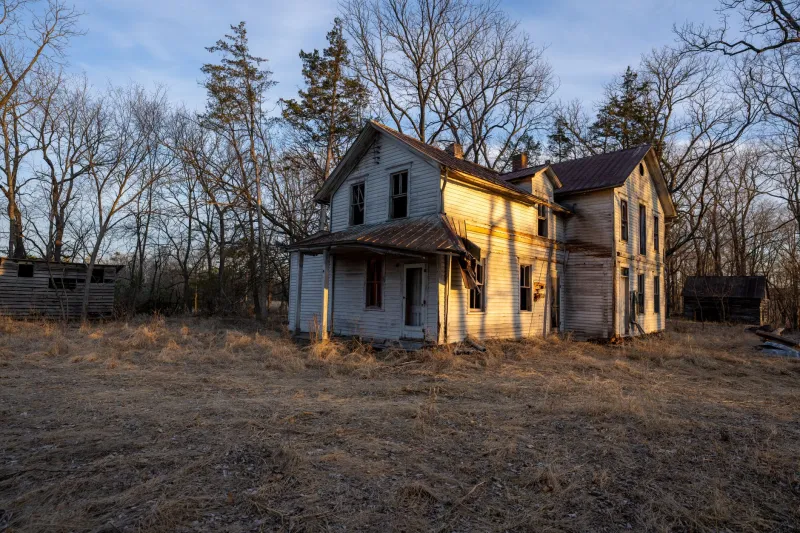
Something about the 1980s keeps calling us back. Not the actual 1980s — the version that exists in American cultural memory, soft-focused and saturated, full of wood-paneled station wagons and dead malls and the specific quality of late-afternoon light that nostalgia manufactures for decades it wants to revisit. Supernatural horror has been mining that particular vein for years now, and it shows no signs of stopping. Stranger Things built an entire universe in it. Dozens of ghost films have set their hauntings in split-level ranch houses that feel like time capsules of a particular American moment.
But the 1980s are just the most recent layer. Pull back further and you find horror films set in the 1970s, the 1950s, the Victorian era, the colonial period. American supernatural cinema has an almost compulsive relationship with historical settings, and the question of why — really why, underneath the aesthetic appeal — turns out to be more interesting than the haunted houses themselves.
The Past as a Permission Structure
There's a surface-level explanation for why ghost stories get set in the past, and it's not wrong: historical settings provide built-in atmosphere. Old architecture is inherently more photogenic in a horror context. Candlelight and drafty hallways and the absence of cell phones — all the conveniences that contemporary audiences would use to immediately resolve a haunting situation — are automatically excluded. Setting a ghost story in 1692 Salem or 1973 rural Pennsylvania means your characters are isolated in ways that feel organic rather than contrived.
But that's craft logic, not cultural logic. It explains the how, not the why. And the why, when you start pulling at it, has a lot more to do with what Americans need from their horror than with what's cinematically convenient.
Historical settings give audiences permission to feel things about American history that the present tense makes too raw. A ghost story set during the colonial period can engage directly with the violence of that era — the Salem trials, the displacement of indigenous peoples, the earliest architecture of American slavery — in a way that a contemporary thriller set in a present-day suburb can't, or at least can't without triggering a very different kind of cultural conversation. The period frame creates enough distance for the horror to function as horror rather than as political provocation.
Except, of course, that it is political provocation. It's just delivered through a genre that audiences have agreed to receive on different terms.
What the Houses Remember
American supernatural horror has always been unusually interested in real estate. This is partly because the country's history is so thoroughly embedded in property — who owned it, who was displaced from it, who built it under what conditions, who inherited it without asking too many questions. The haunted house isn't just a horror setting in American cinema. It's a national metaphor that's been operating more or less continuously since the genre existed.
When a ghost story is set in a colonial farmhouse in New England, the building itself carries a specific historical weight. Those structures were built on land with a prior history that the colonizers deliberately chose not to reckon with. The ghost in that house isn't just a scary dead person. It's the embodiment of a transaction that was never completed, a debt that was never paid, a history that was papered over with subsequent construction.
Set the same story in a 1950s suburban development, and you get a different but related set of resonances. Those neighborhoods were built through policies that explicitly excluded Black families from ownership. The prosperity and safety and nostalgic warmth that mid-century suburbia represents in American cultural memory was constructed on top of an active injustice. A ghost in that setting carries that history whether the filmmaker intends it or not.
The best period ghost films know exactly what they're doing with that weight. Get Out, though not strictly a ghost story, operates entirely on the horror of a particular American domestic tradition. The Witch uses its 1630s Puritan setting to make the terror of social exclusion and patriarchal control feel visceral rather than academic. Hereditary is set in the present but haunted by the specific demons of a particular kind of American family mythology that was built in the twentieth century.
Nostalgia as a Trap
There's another layer to the period-setting obsession that's worth naming directly: nostalgia itself has become a horror subject.
The 1980s settings that dominate so much contemporary supernatural storytelling aren't just atmospheric choices. They're engaging with a specific cultural phenomenon — the American tendency to idealize decades that were, on examination, not nearly as simple or safe or good as the nostalgia machine insists. The horror in a lot of these stories isn't just the ghost. It's the gap between what the setting is supposed to represent and what it actually contained.
A ghost story set in a sun-drenched 1983 suburb is implicitly asking: what was underneath all that? What was the cost of that particular version of the American dream, and who paid it, and what happens when the bill finally comes due? The ghost is the answer to that question made flesh — or whatever the supernatural equivalent of flesh is.
This is why the nostalgia-horror subgenre feels so specifically American. Other countries have period ghost stories, but they don't have the same cultural investment in a particular recent past as a lost paradise. The American relationship with the 1950s, 1960s, and 1980s is uniquely freighted with the mythology of a better, simpler time — a mythology that requires a lot of selective forgetting to sustain. Horror is the genre that insists on remembering.
The Unfinished Business of American History
Ghost stories, across every culture that has them, share a common logic: the haunting persists because something is unresolved. The spirit cannot move on because the wrong was never acknowledged, the truth was never told, the reckoning never came. In this sense, the ghost is always a form of historical pressure — the past refusing to stay in the past until the present does something about it.
For a country with as much unresolved history as the United States, that premise is essentially inexhaustible. There are enough unacknowledged wrongs, enough buried truths, enough debts that got deferred rather than paid, to fuel supernatural horror for another century without running out of material.
And maybe that's the real answer to why American ghost movies keep going back. It's not just atmosphere. It's not just nostalgia. It's a country that has never fully reckoned with its own origins, told through a genre built entirely on the premise that what you don't reckon with will eventually come back to find you.
The dead are patient. They've got nowhere else to be.