Root for the Ghost: Why Horror's Monsters Are Stealing the Whole Movie
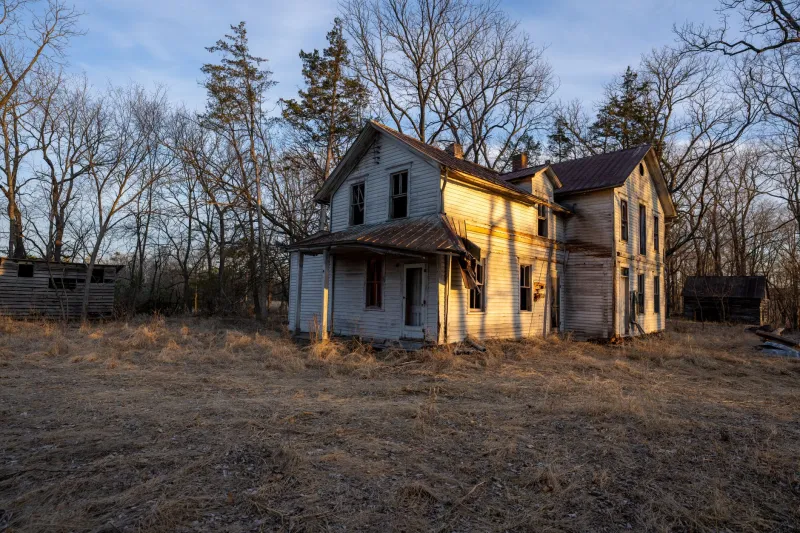
There's a moment in a lot of modern ghost films — you've probably felt it — where the supernatural villain does something genuinely awful, and some small, embarrassing part of you thinks: fair enough. Maybe the spirit just dragged a real estate developer through the wall of a house that was built on a burial ground he knew about. Maybe a colonial-era ghost just made life extremely unpleasant for a family that never once asked why they got such a nice old property for so cheap. Whatever the specifics, the feeling is the same: a quiet, uncomfortable solidarity with the monster.
That's not an accident. Horror filmmakers have been engineering that reaction with increasing precision, and it's worth asking why — and what it says about the audiences who keep showing up to experience it.
The Protagonist Problem
For most of horror's history, the formula was simple: you had a normal person, a threat, and a survival story. You rooted for the survivor because survival was the point. The ghost, the demon, the shapeless dread in the attic — these were obstacles, not characters. They existed to generate fear, not sympathy.
That model worked fine when audiences trusted the idea that the person running was inherently worth saving. But somewhere in the last decade or so, that trust started to erode. Contemporary horror protagonists often arrive on screen with their own complicated moral ledgers. They've inherited houses with ugly histories. They've ignored warning signs because the house was affordable. They've prioritized convenience over conscience, and the ghost — the one entity in the story who literally cannot move on — is the walking, shrieking embodiment of all the consequences they hoped to avoid.
When a protagonist's core dramatic problem is that they bought into something they should have questioned, it's hard to root for their escape without also endorsing the avoidance.
Backstory as the Real Horror
The shift in audience sympathy tracks almost perfectly with a shift in how ghost films handle exposition. For a long time, the haunting entity's history was revealed late in the third act as a plot device — a way to explain the rules so the heroes could break the curse and roll credits. The backstory existed to serve the resolution.
Now, increasingly, the backstory is the movie. Films like The Haunting of Hill House (yes, technically a series, but the storytelling DNA is the same), His House, and Relic spend enormous energy making sure audiences understand exactly what happened to the supernatural presence before the living characters showed up. By the time the haunting is in full swing, you've already grieved with the ghost. You know what was taken. You understand the specific, human-scale injustice that created this particular horror.
And the living characters? They often don't know any of that. They're operating on partial information, making choices that seem reasonable from inside their ignorance but look monstrous from the outside — which is where the audience is sitting, holding all the context the protagonist lacks.
That's a genuinely uncomfortable position to occupy for ninety minutes. It's also, not coincidentally, a pretty accurate description of how a lot of people feel about navigating American institutions right now.
Powerlessness Has a New Face
Here's the psychological engine underneath all of this: ghost stories have always been about power. Who has it, who lost it, who's trying to reclaim it from beyond the grave. The classic haunting narrative placed power with the living — they had agency, resources, the ability to call a priest or a parapsychologist or just get in the car and leave.
Modern ghost narratives are much less confident about that arrangement. The ghosts in contemporary horror often represent people who were systematically stripped of power while alive — enslaved people, indigenous communities, women murdered for inconvenient knowledge, workers killed in disasters that got covered up. Their hauntings aren't random malevolence. They're the logical continuation of grievances that were never addressed, amplified by death into something that can't be ignored anymore.
Meanwhile, the living characters are frequently coded as people who benefit — even passively, even unknowingly — from the same systems that created the ghost's suffering. They didn't personally do anything wrong. But they're standing in the house, and the house has a history, and the ghost does not particularly care about the distinction between active harm and comfortable inheritance.
For audiences who have spent the better part of the last decade grappling with exactly those distinctions in their own lives, that dynamic lands differently than it would have in 1985. The ghost isn't just scary. The ghost is legible. Its anger makes sense in a way that a lot of institutional responses to injustice simply don't.
When Survival Stops Being the Point
What makes this trend genuinely interesting — rather than just politically on-brand — is how it complicates the mechanics of horror itself. The genre depends on you wanting the protagonist to survive. Suspense requires investment. If you're quietly rooting for the ghost, the traditional tension collapses, and filmmakers have to build something else in its place.
The best recent examples replace survival tension with moral tension. You're not watching to see if the protagonist gets out alive. You're watching to see if they reckon with what they're running from. The horror isn't the ghost catching them — it's the protagonist escaping without ever understanding why they were being chased. An ending where the family packs up and drives away, intact, having learned nothing, can feel more disturbing than any jump scare.
That's a significant evolution in what horror asks of its audience. It used to ask: can they survive? Now it's asking: do they deserve to?
The Ghost Knows Something You Don't
Ultimately, the relatable supernatural villain works because ghosts, by definition, carry information. They are the accumulated weight of what happened — the events that got minimized, rewritten, or simply never acknowledged. When a haunting entity's motivation is more coherent than the protagonist's desire to just live in a nice house in peace, it's because the ghost represents everything that coherent desire requires you to not think about.
Modern horror is increasingly interested in that gap. The space between what people want and what they're willing to know. And the ghost, restless and furious and refusing to stay buried, is the perfect vessel for everything that lives in that gap.
So the next time you find yourself quietly, guiltily sympathizing with the thing that's supposed to terrify you — don't fight it. That discomfort is the movie working exactly as intended. The dead have something to say. The least we can do is listen.