Wired for Fear: How AI Is Outpacing Humans at Building the Perfect Ghost
There's a specific kind of dread that settles in when a ghost movie gets it exactly right. Not the jump-scare cheap shot, not the CGI blob floating across a hallway — but that slow, creeping wrongness that makes you genuinely unsure what you just saw. For decades, that feeling came from human hands: a makeup artist's instinct, a director's gut call about where to put the camera, a practical effects team working at 2 a.m. trying to make something feel genuinely off.
Now, increasingly, it's coming from a server farm.
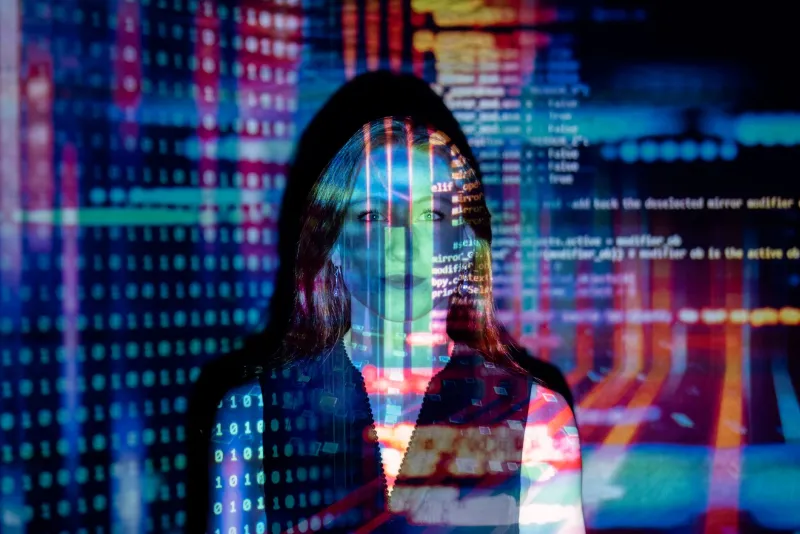
Artificial intelligence has been creeping into film production for years, mostly in quiet, unglamorous ways — color grading, de-aging actors, generating background extras. But inside the horror genre, and ghost movies specifically, something more interesting is happening. AI tools aren't just speeding up production pipelines. They're actively learning what terrifies human beings, and they're getting disturbingly good at it.
The Algorithm Knows What Scares You
The starting point for this conversation is data. Studios and independent production companies alike have begun feeding machine learning models with enormous libraries of audience response data — eye-tracking studies, heart rate monitoring from test screenings, social media sentiment analysis, even aggregated search behavior following horror releases. The goal is deceptively simple: figure out what visual and audio patterns reliably trigger fear responses, then reverse-engineer them into production design.
Visual effects supervisor Dana Keller, who has worked on several mid-budget supernatural thrillers over the past few years, described the shift in blunt terms. "We used to rely on experience and instinct," she said. "Now I have tools that can generate fifty variations of a ghost's movement pattern and tell me statistically which one test audiences found most disturbing. It's not replacing the creative call — but it's informing it in ways that would've been impossible five years ago."
What the data keeps surfacing, apparently, isn't what most people expect. It's not the dramatic, full-body apparition. It's peripheral movement. Faces that are almost right but not quite. Eyes that track when they shouldn't. In other words, the uncanny valley — long considered a problem for digital effects — turns out to be, in the ghost movie context, precisely the point.
AI-generated figures, by their nature, exist in that valley. They move with a logic that's almost human. The slight wrongness isn't a bug; for a ghost, it's the whole feature.
Practical Effects People Are Not Thrilled About This
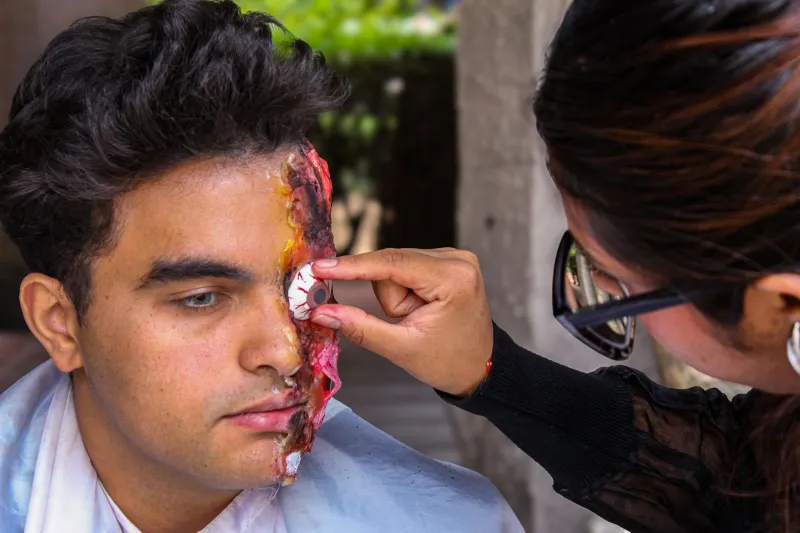
Predictably, the practical effects community has opinions. Veteran creature and effects designer Marcus Tran has spent over two decades building physical scares for horror productions ranging from low-budget indie shoots to major studio releases. He's not exactly warming up to the new wave.
"There's a texture to practical work that you feel even when you can't explain it," Tran said. "An actor reacting to something physically present in the room — that's real fear you're capturing. When everything is generated, you lose that feedback loop. The ghost isn't scaring the actor. The actor is pretending to be scared of a tennis ball on a stick, and then the ghost gets dropped in later. Audiences feel that disconnect, even if they can't name it."
He has a point that the data doesn't easily refute. Some of the most enduring ghost movie moments in American cinema — the hallway twins in The Shining, the crawl down the stairs in The Grudge, the sheet ghost sequence in The Innocents — were achieved with physical presence. A human body doing something a human body shouldn't be doing. That's a specific kind of horror that has nothing to do with render quality.
But the counterargument is gaining traction in production circles. AI isn't necessarily replacing that physicality — it's augmenting it. Hybrid approaches, where practical elements are captured on set and then manipulated through generative tools in post, are becoming standard on productions that want both the authentic actor reaction and the visual flexibility of digital.
Generative Ghosts and the Question of Soul
The more philosophically uncomfortable territory is fully generative ghost design — figures, environments, and movements created entirely by AI with minimal human creative input. Several experimental short films screened at genre festivals over the past two years have gone this route, with results that are genuinely hard to categorize.
They're unsettling. Deeply so, in some cases. But they're unsettling in a specific, clinical way that's different from the emotional texture of traditionally crafted horror. One filmmaker who requested anonymity described watching a fully AI-generated ghost sequence and feeling "scared but empty — like the fear didn't go anywhere after it hit you."
That might be the crux of the whole debate. Fear is easy to trigger. Dread — the kind that lingers, that follows you out of the theater and into your parking lot and back into your house — requires something more. It requires the sense that a human being made choices, that something meaningful is embedded in the image. A ghost story, at its core, is about loss and memory and the weight of the past pressing into the present. Whether an algorithm can carry that weight is a genuinely open question.
Where This Is All Going
For Ghostheads, the ghost movie is sacred territory. And the honest answer is that AI isn't going to kill the genre — it's going to complicate it in ways that are worth watching closely.
The productions that figure out how to use these tools without surrendering the human element will probably make some of the most visually inventive supernatural horror in decades. The ones that lean on AI as a shortcut to avoid the harder creative work will produce films that feel exactly like what they are: technically proficient, emotionally hollow, and ultimately forgettable.
Ghosts are supposed to be the remnants of something human. The best ghost movies have always understood that. The machine is learning fast — but it hasn't lost anyone yet. That still matters.