The Loudest Scare Is Nothing At All: Ghost Cinema's Secret Weapon
At some point during Hereditary, the score drops out completely. No strings, no low-frequency hum, no carefully calibrated ambient texture. Just a house, and what's moving through it, and the particular quality of silence that makes you realize you've been holding your breath for approximately forty-five seconds without noticing. That moment — that specific, engineered nothing — is more frightening than anything Ari Aster puts on screen before or after it.
And it cost, in terms of raw production resources, essentially zero dollars.
The horror genre has been chasing the perfect scare for as long as it's existed, and the pursuit has gotten expensive. Contemporary ghost films deploy motion-capture rigs, practical prosthetics built by teams of artists, visual effects pipelines that rival blockbuster action films, and scores composed by some of the most technically accomplished musicians in Hollywood. All of that craft is real, and a lot of it is genuinely impressive. But ask almost any dedicated horror fan which moment in a recent supernatural film actually got under their skin, and the answer almost always points back to sound — specifically, to its absence.
The Science of the Quiet
Human beings are wired to treat silence as a warning signal. In evolutionary terms, sudden quiet in an environment that was previously full of ambient sound — birds, wind, the general noise of a living world — meant that something had changed the environment. Something had arrived. The animal brain doesn't wait for visual confirmation. It starts preparing a response before the eyes have a chance to catch up.
Filmmakers discovered this accidentally long before neuroscience gave it a name. Early horror directors noticed that audiences responded to certain moments of quiet with a physical, almost involuntary tension that no musical cue seemed to replicate. The instinct was there from the beginning. The craft to deploy it deliberately took decades to develop.
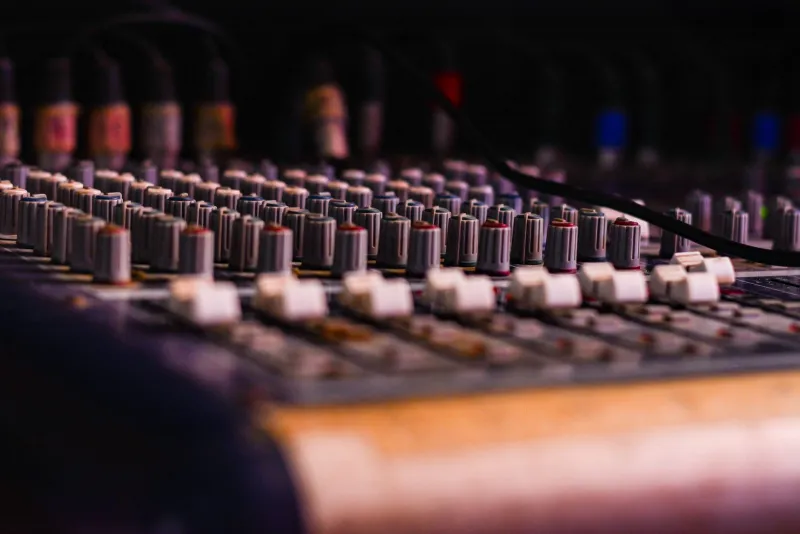
Modern sound designers working in supernatural horror have essentially turned that evolutionary vulnerability into a precision instrument. The technique isn't simply turning the sound off. It's about establishing a sonic baseline — a specific, recognizable texture of ambient noise that an audience absorbs without consciously registering — and then selectively removing elements of it until the absence is felt before it's understood.
Building the Baseline
Before a sound designer can weaponize silence, they have to make the audience comfortable. This is the part of supernatural horror sound work that gets almost no critical attention, because it's specifically designed to be invisible.
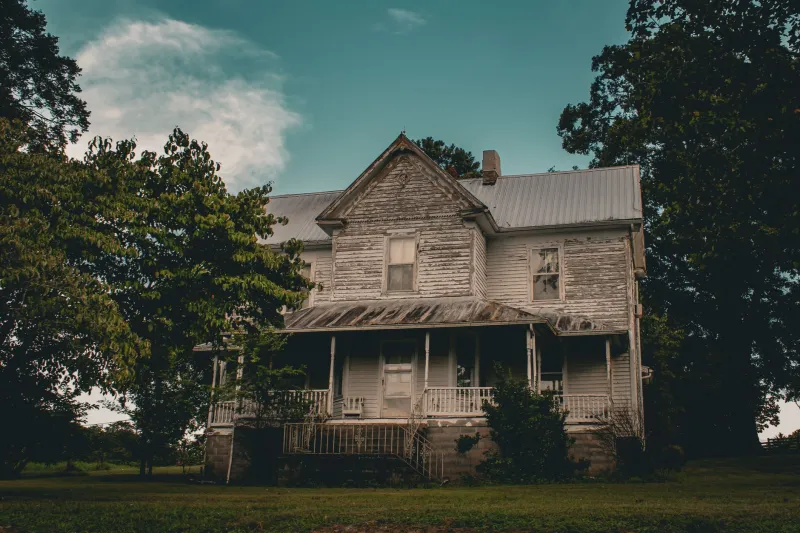
In a well-constructed ghost film, every location has a sound identity. A colonial farmhouse creaks in a particular rhythm. A suburban basement has its own specific hum — the HVAC system, the refrigerator upstairs, the faint traffic from two blocks over. An apartment building carries the ghost of its neighbors' lives: muffled television, someone's shower, a dog that barks at irregular intervals. These aren't incidental sounds. They're being placed deliberately, mixed at a level that slides under conscious attention, and repeated with enough consistency that the brain logs them as normal.
That's the setup. The scare comes when those sounds stop.
When the refrigerator hum disappears in the middle of a scene — not with a dramatic musical sting, just quietly, the way a refrigerator actually stops — audiences feel it before they can explain why they feel it. The brain has already flagged the absence as a problem. The eyes are still looking at an empty hallway. The body is already responding.
The Jump Scare and Its Discontents
It's worth being honest about why silence-based horror represents a genuine evolution in craft: it's a direct rejection of the jump scare, which is the laziest and most overused tool in the genre's kit.
The jump scare works on a purely mechanical level. A sudden loud noise triggers a startle response regardless of narrative context, regardless of whether the audience is emotionally invested, regardless of whether anything meaningful is happening on screen. It's a reflex, not a reaction. And like any reflex that gets triggered repeatedly, it dulls with exposure. Audiences who've watched a lot of horror are genuinely harder to jump-scare, because they've pattern-matched the setup: quiet moment, lingering shot, sudden loud thing. Their nervous systems have learned to wait for it.
Silence doesn't dull. If anything, it gets more effective the more familiar an audience is with horror conventions, because experienced viewers know that the silence means something is about to happen — they just can't predict when or what. The anticipation becomes its own form of suffering, and unlike the jump scare, it lasts. A good stretch of engineered quiet can hold an audience in a state of genuine dread for minutes at a time, which is an eternity in cinematic terms.
Ghost Films That Got It Right
The canonical examples of silence-as-horror in supernatural cinema span several decades, which suggests this isn't a trend so much as a recurring discovery.
The Shining uses the Overlook Hotel's ambient sound — that particular institutional hum of a large empty building — as a constant presence, and the moments when it cuts out carry a weight that Kubrick's more overtly stylized sequences never quite match. The Others builds almost its entire second act on the sound of a house that's too quiet for the number of people supposedly living in it. A Quiet Place took the concept to its logical extreme by making silence a literal survival requirement, turning the entire film into an extended exercise in what the absence of sound does to an audience's nervous system.
More recently, The Babadook, Midsommar, and The Black Phone all demonstrate sophisticated understanding of how to use ambient quiet as a structural element rather than a punctuation mark. These films treat silence not as the space between scary moments, but as a scary moment in itself.
What the Ears Know That the Eyes Don't
There's a reason ghost stories, in their oldest oral forms, were told in the dark. The visual element was always secondary. What mattered was the voice, the cadence, the pauses — the way a skilled storyteller could make a room full of people strain forward into silence, filling it with their own imaginations.
Film sound design, at its best, is doing exactly that. It's creating conditions under which the audience's own mind becomes the most effective horror tool in the room. The ghost you imagine in the silence between sounds is always going to be more precisely calibrated to your personal fears than anything a production designer can build.
The best ghost films understand this. They're not trying to show you something terrifying. They're engineering the conditions under which you terrify yourself. And the most powerful tool in that process isn't the jump scare, isn't the visual effect, isn't even the score.
It's the moment when everything goes quiet, and your brain — ancient, wired for survival, already scanning for what changed — starts doing the work for them.