Legends with Receipts: The American Ghost Stories That Actually Happened
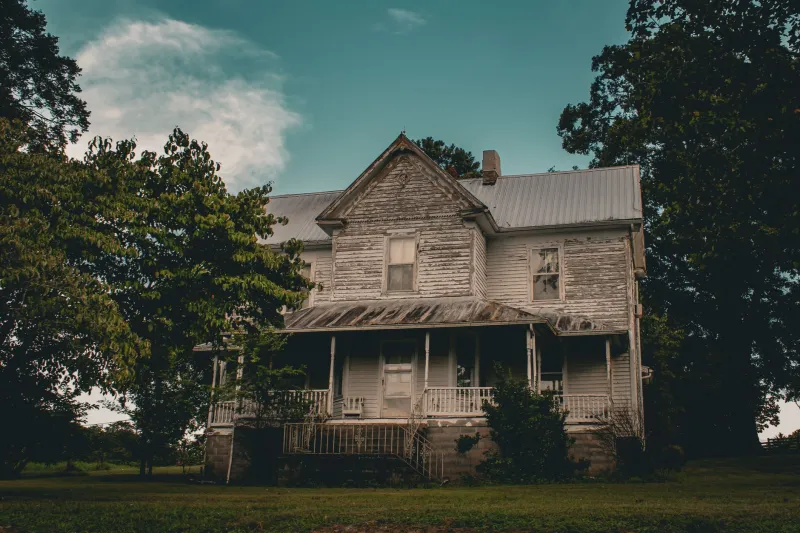
There's a version of every ghost story that gets passed around at slumber parties, whispered in school hallways, and recycled across a thousand low-budget horror flicks. Then there's the version that exists in county records, newspaper morgues, and paranormal archives — the one that started somewhere real before the folklore machine got hold of it.
At Ghostheads, we spend a lot of time thinking about where ghost stories come from. Not just because Ghostheads is built on the idea that the dead are coming — but because the scariest narratives are always the ones that didn't start as fiction. So we went digging. What follows is a curated breakdown of some of America's most famous supernatural legends, ranked by how much actual historical evidence sits underneath them.
Spoiler: more of them than you'd expect have receipts.
The Bell Witch of Adams, Tennessee
If you've spent any time in horror circles, you've heard the Bell Witch story. It's been adapted into films, podcasts, and documentary series more times than anyone can count. But here's what often gets glossed over: the haunting of the Bell family farm in the early 1800s is one of the most extensively documented paranormal cases in American history.
John Bell, a prosperous farmer in Robertson County, reportedly began experiencing violent physical attacks — hair pulling, slapping, choking — that witnesses claimed came from an invisible source. His wife, Lucy, described hearing chains dragging across the floor and stones pelting the outside of their cabin. Neighbors confirmed the disturbances. Even Andrew Jackson, who visited the farm around 1819, reportedly left early after his own unsettling encounter.
The case was documented in Martin Ingram's 1894 book An Authenticated History of the Famous Bell Witch, which drew on firsthand family accounts. Historians debate the details, but the core events — strange sounds, physical phenomena, multiple credible witnesses — are woven into the actual historical record of Robertson County. This isn't just folklore. It's folklore with a paper trail.
The Greenbrier Ghost: When a Spirit Testified in Court
This one is genuinely remarkable. In 1897, in Greenbrier County, West Virginia, a woman named Zona Heaster Shue died under suspicious circumstances. Her death was initially ruled natural. Then her mother, Mary Jane Heaster, claimed that Zona's ghost appeared to her over four consecutive nights and described being murdered by her husband, Erasmus Shue.
Mary Jane took her story to the local prosecutor. Erasmus was eventually tried for murder — and the ghost's testimony, as relayed by Mary Jane, was actually admitted into court proceedings. The jury convicted him. To this day, the Greenbrier Ghost case is cited as the only known instance in American legal history where spectral testimony contributed to a murder conviction.
The historical record here is airtight: court documents, newspaper coverage from the Greenbrier Independent, and official records all confirm the basic facts. Whether you believe Zona actually appeared to her mother is beside the point. Something happened in that courtroom that no one has been able to cleanly explain away.
The Myrtles Plantation: Louisiana's Most Documented Haunting
Built in 1796 in St. Francisville, Louisiana, the Myrtles Plantation has generated more documented paranormal reports than almost any other historic site in the South. The most persistent legend involves Chloe, an enslaved woman who, according to local accounts, poisoned a cake that killed two of the plantation owner's children and his wife before being hanged by fellow enslaved people.
Historians have found no definitive documentary proof of Chloe specifically, which makes her a murkier case than Bell or Greenbrier. What IS documented, extensively, is the sheer volume of reported paranormal activity at the property over more than two centuries — apparitions, mirror anomalies, unexplained footsteps. Paranormal investigators have studied the site repeatedly. The plantation even operates as a bed and breakfast today, specifically trading on its haunted reputation.
The Chloe legend may be embellished. But the Myrtles as a genuine locus of supernatural activity? That's backed by enough independent eyewitness accounts across enough decades to take seriously.
The Whaley House: America's Most Haunted Home, Per the Government
The U.S. Commerce Department's Office of Historic Preservation once designated the Whaley House in Old Town San Diego as one of the two most haunted houses in America. That's not a horror movie tagline. That's a federal designation.
Built in 1857 on the site of a former gallows, the Whaley House has a layered history of death, grief, and tragedy. Thomas Whaley lost a young son to scarlet fever in the house. His daughter Violet died by suicide on the property years later. Visitors have reported seeing apparitions that match descriptions of Thomas Whaley himself — a heavyset man in a top hat — since the home was opened to the public in the 1960s.
The combination of documented tragedy, a historically verified execution site, and decades of consistent paranormal reports from independent visitors makes the Whaley House one of the strongest cases for a legend with genuine historical roots. The ghost story didn't invent the darkness here. The darkness came first.
The Hook: Where Real Crime Meets Campfire Myth
Not every legend holds up this well. The Hook — that classic story of an escaped mental patient with a hook for a hand terrorizing teenagers in a parked car — is almost certainly a piece of pure American folklore. Folklorists like Jan Harold Brunvand have traced it back to the 1950s, where it likely emerged as a cautionary tale aimed at teenagers during the early car culture era.
There are no verified incidents that match the legend's core narrative. No hook-handed escapee. No specific location. Just a story that spread because it tapped into very real anxieties of its moment — fears about sexual vulnerability, suburban safety, and the dark outside the windshield. The Hook is a perfect ghost story, but it's a manufactured one. It belongs to folklore, not history.
The distinction matters. And it's exactly the kind of distinction that makes the Bell Witch and the Greenbrier Ghost feel so much more unsettling by comparison.
Why It Matters for Horror Storytelling
Here's the thing about legends with real roots: they hit differently. When a filmmaker draws on the Whaley House or the Bell Witch case, they're not just borrowing atmosphere — they're inheriting a genuine human story, complete with grief, violence, and unresolved questions. That's the raw material that separates a horror film that sticks with you from one you forget before the credits finish rolling.
At Ghostheads, we believe the best supernatural storytelling is always in conversation with something real. The dead don't just show up randomly in the best ghost narratives — they show up because something happened that the living couldn't put to rest.
America has more of those stories than most countries care to admit. And the archives are full of them, waiting to be found.