Bleeding Through the Screen: The Real Pain Behind Horror's Most Unforgettable Performances
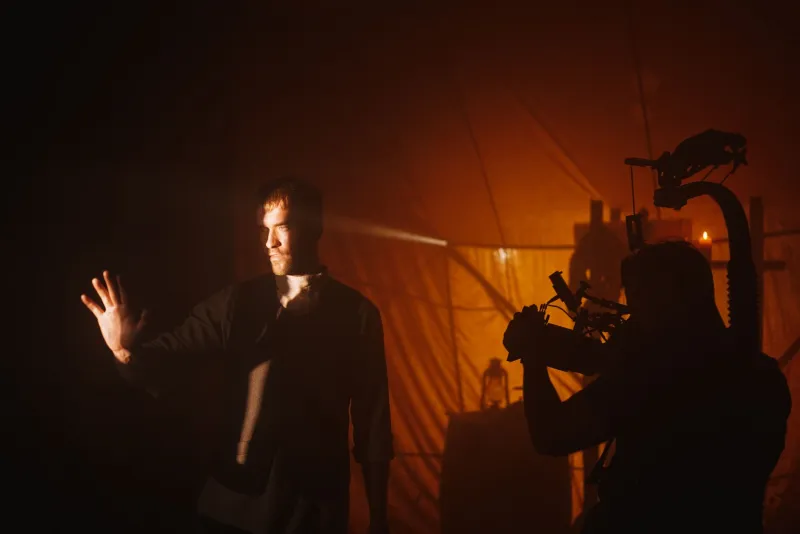
There's a specific kind of dread that settles in when you're watching a ghost movie and something shifts — when a performance stops feeling like acting and starts feeling like witnessing. You lean back from the screen without realizing it. Your stomach does something uncomfortable. You're not sure if you're watching a character break down or a person.
That feeling isn't accidental. And it's not always just good technique.
Some of the most viscerally disturbing performances in supernatural horror come from actors who weren't entirely pretending. They were pulling from somewhere real — grief that hadn't fully processed, anxiety that never got addressed, memories they'd spent years trying to outrun. The ghost on screen becomes a vehicle for the ghost inside the performer. And audiences feel it, even if they can't name it.
The Method Has a Price
Method acting gets a lot of eye-rolls these days, and fair enough — the stories of actors refusing to break character between takes or putting themselves through unnecessary physical suffering have become cultural punchlines. But when it comes to horror specifically, the psychological immersion that method-adjacent approaches demand can produce something genuinely unsettling.
The reason is pretty straightforward: possession, haunting, and supernatural terror as narrative devices are almost always metaphors for psychological states. Grief. Guilt. Dissociation. Trauma responses. When an actor is asked to portray someone being consumed by a malevolent presence, the most effective emotional shorthand isn't imagining a ghost — it's remembering a time when something invisible was eating them alive.
Actors who've spoken candidly about their horror work often describe a process that sounds less like performance preparation and more like controlled psychological excavation. They're not building a character from the outside in. They're finding the version of themselves that already knows what it feels like to lose control, to feel watched, to be afraid of their own mind.
When Personal Loss Becomes the Performance
Grief is probably the most commonly mined emotional territory in supernatural performance, and that makes sense given how much ghost cinema is fundamentally about grief. The horror genre has always used the literal ghost as a stand-in for the psychological weight of loss — the person who won't stop haunting you because you haven't figured out how to let them go.
Actors who've lost someone close — a parent, a partner, a child — and then stepped into a ghost film shortly after describe something that sounds almost uncomfortably useful. The hollow quality that comes with fresh mourning, the way your face stops doing what you tell it to, the physical heaviness of carrying something that has no weight — these become tools. The camera catches what the actor is actually feeling, and it reads as supernatural dread because that's what grief actually looks like when you're inside it.
This isn't exploitation of personal pain for entertainment value, at least not in the cases where it's handled thoughtfully. It's closer to what any serious artist does: take lived experience and refract it through a fictional frame in a way that makes something universal visible. The ghost movie just happens to be an unusually direct pipeline between private psychological pain and public horror.
Dissociation as Direction
Possession scenes are their own specific beast. The physical contortion, the vocal distortion, the eyes going somewhere that isn't quite here — these are the images that end up on movie posters and haunt people for years after the credits roll. And the best of them have something in common: they feel medically accurate in a way that's hard to articulate.
That accuracy sometimes comes from actors who have personal experience with dissociative episodes, panic disorders, or trauma responses that look, from the outside, a lot like what we've culturally coded as possession. The disconnection from your own body. The sense that something else is operating you. The way your voice can come out sounding like it belongs to someone you don't recognize.
Actors who've navigated anxiety disorders or PTSD describe the possession performance as one of the more cathartic things they've done professionally — not because it's fun, but because it's honest. They're not performing a state they've never been in. They're performing a state they've worked very hard to manage, and the camera is catching the truth of what that state actually feels like.
The Emotional Toll Nobody Talks About
Here's the part that doesn't make it into the press junket interviews: staying in that psychological space has consequences.
Actors who spend weeks or months working on a ghost film — particularly one that requires sustained emotional excavation — often describe a specific kind of hangover that follows them out of production. The material doesn't just stay on set. You've been deliberately accessing parts of your psyche that you usually keep managed, and those parts don't neatly close back up when the director calls wrap.
Some performers describe vivid nightmares that outlasted the shoot by months. Others talk about a flatness or emotional numbness that set in after particularly intense sequences — the psychological equivalent of a muscle that's been pushed past its limit. A few have spoken openly about seeking therapy specifically to decompress from horror work, not because the film was poorly made, but because it was made too well, and they gave too much of themselves to it.
This isn't a cautionary tale against immersive performance. It's an acknowledgment that the best horror performances aren't free. Someone paid for them in a currency that doesn't show up in the production budget.
What This Means for What We're Watching
For audiences, understanding this dynamic changes the experience of watching supernatural horror — or at least it should. The moment that made you grab the person next to you in the theater, the close-up that made you look away from the screen, the performance that stuck with you for days after: there's a real person behind that. Someone who found something in themselves that was genuinely frightening and put it on screen for you.
Ghost movies work because they externalize internal experience. The haunting is always also a metaphor. And the performances that land hardest are the ones where the actor isn't just performing the metaphor — they're living it, at least temporarily, and trusting the audience to receive it.
That's a strange and remarkable kind of courage. It's also, when you think about it, exactly what Ghostheads is built around: the idea that what scares us most isn't the ghost on screen. It's the recognition that the ghost was always already inside us.
The dead are coming. And sometimes, they're coming from within the performer.