There's No Place Like Haunted: Why American Cinema Keeps Terrorizing Us Inside Our Own Homes
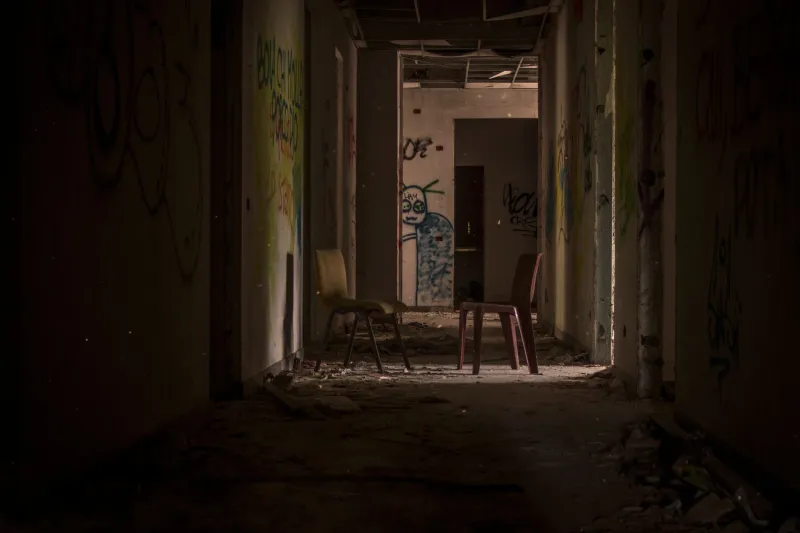
There's a moment in almost every haunted house movie where someone says it out loud: we should just leave. And the audience nods, because yes, obviously, get out of the cursed house. But they don't leave — or if they do, something pulls them back. The mortgage. The memories. The sunk cost of everything they put into that kitchen renovation. And right there, buried inside what looks like a genre cliché, is the real horror story: the one about what we'll endure to hold onto a place we call home.
American cinema has been obsessed with haunted domestic spaces for decades, and that obsession isn't slowing down. If anything, it's accelerating. The haunted house film has quietly become one of the most reliable vehicles for cultural anxiety in the modern era — not because ghosts are scary, but because homes are scary. The dead just make it easier to talk about.
Four Walls, Infinite Dread
Think about what a house actually represents in the American imagination. It's financial security, generational wealth, personal identity, and the promise that you've made it — that you've earned a permanent place in the world. Homeownership is practically baked into the national mythology. So when a filmmaker wants to destabilize an audience at their core, there's no more efficient target than the structure that houses all of that meaning.
Haunted house films work because they take the one space where you're supposed to be untouchable and fill it with something you cannot control, cannot reason with, and cannot evict through any normal legal process. The horror isn't the ghost. The horror is that your safe place was never really safe. It was always someone else's territory first.
That's a deeply American fear, by the way — the idea that the land beneath your foundation carries a history you didn't choose and can't escape. Films like The Conjuring, Hereditary, and Sinister don't just use houses as backdrops. They treat the home itself as a kind of trap, a space that looks like sanctuary but functions like a cage. The walls close in. The exits feel wrong. The place you chose becomes the place that chose you.
The Housing Market as Horror Premise
Here's something worth sitting with: the modern haunted house film boom runs almost parallel to the most turbulent period in American housing history. The 2008 financial collapse, the foreclosure crisis, the post-pandemic inventory squeeze, the rise of the remote-work migration that priced entire communities out of their own neighborhoods — all of it has made the question of where do I belong? feel genuinely terrifying for millions of Americans.
When a young couple in a horror film stretches their budget to buy a fixer-upper they can barely afford, and then discovers it's haunted, that's not just a plot device. That's a specific, recognizable anxiety dressed in supernatural clothing. The ghost is almost secondary to the dread of the down payment, the fear of what's behind the walls, the creeping suspicion that you've made a catastrophic decision that you can't undo.
Filmmakers have gotten savvy about this. The haunted properties in contemporary horror aren't always crumbling Gothic mansions anymore. They're inherited farmhouses that come with strings attached. They're suspiciously affordable apartments in cities where nothing is affordable. They're flipped Victorians where someone clearly skipped a few inspections. The settings feel lived-in and recognizable because they're designed to. The horror lands harder when you can imagine yourself signing the closing documents.
Whose House Is It, Really?
One of the most persistent themes running through haunted house cinema is the question of ownership — specifically, the uncomfortable idea that the people who think they own a home might be wrong about that. Ghosts, by their nature, are former residents. They have a prior claim. And the genre keeps returning to that tension between the living and the dead staking out competing rights to the same square footage.
This plays out in fascinating ways across different subgenres. In some films, the haunting is a form of grief — a previous owner who simply cannot let go, whose emotional residue has soaked into the plaster and the floorboards. In others, it's something darker: a territorial force that views the new occupants as invaders, as people who have no right to be there. And in the most unsettling entries in the genre, the line between those two things blurs completely.
There's also a strand of haunted house horror that engages, sometimes directly and sometimes obliquely, with the actual history of American land. Who lived here before? What happened on this ground? The soil beneath suburban cul-de-sacs and manicured lawns carries stories that don't disappear just because someone poured a foundation over them. Horror has always been willing to go places that polite conversation won't, and the haunted house film has become one of the genre's primary tools for reckoning with that buried history.
The Apartment, the Rental, the Temporary Haunting
It's worth noting that the genre has expanded well beyond the traditional single-family home. Urban horror — the haunted apartment, the cursed rental, the short-term stay that turns sinister — has carved out its own significant niche. And that shift reflects something real about how Americans actually live now.
For a generation that may never own property, the haunted rental hits differently. You didn't choose this place out of aspiration. You chose it out of necessity. You can't renovate your way out of the problem. You don't have equity to protect. What you have is a lease, a landlord who won't return your calls, and something that keeps moving things around in the kitchen at 3 a.m. The powerlessness is the point.
Films that operate in this space — cramped, transient, financially precarious domestic settings — often feel more claustrophobic than their sprawling Victorian counterparts, and that's intentional. The ghost in a rented apartment isn't just haunting a house. It's haunting a life that already feels unstable, a situation that already carries the low-grade anxiety of impermanence.
Why We Keep Watching
So why do audiences keep showing up for haunted house films? Partly, it's the reliable machinery of the genre — the slow build, the jump scare, the cathartic release of screaming in a dark room. But there's something more durable underneath all of that.
Watching someone else's home become a nightmare is a way of processing our own fears about the places we inhabit. It's a controlled burn. You get to experience the worst-case scenario — the foundation is compromised, the history is horrifying, the walls are not your friends — and then walk out of the theater and go home. The lights come up. Your house is still just your house.
Or at least, that's the idea. The best haunted house films have a way of following you back through the front door. They make you pause in the hallway. They make you notice the sounds your building makes at night, the way certain rooms feel different after dark, the question you've never quite asked yourself: what happened here before I arrived?
That's the real power of the genre. Not the ghost. Not the gore. The slow, creeping realization that home was never the opposite of haunted. It was always just haunted in ways you hadn't noticed yet.
The dead are patient. They've got nowhere else to be.