Your Ancestors Called. They're Still Angry.
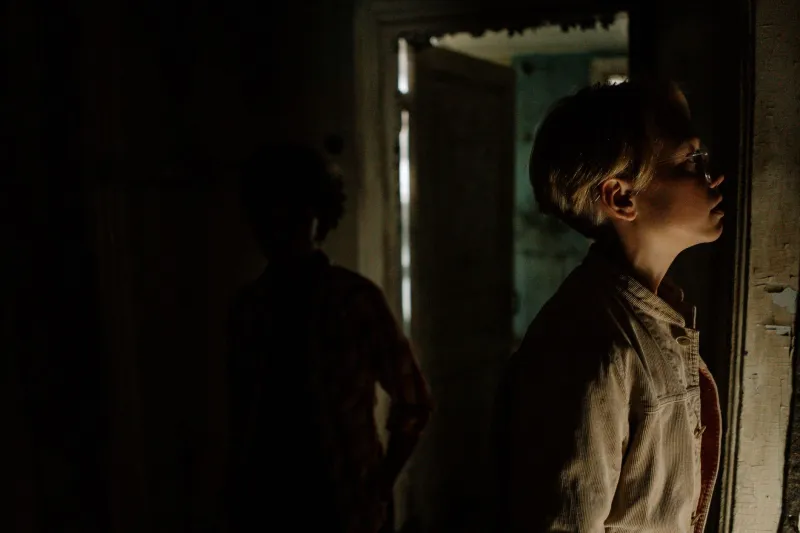
There's a moment in a certain kind of ghost movie — you know the one — where the protagonist stands in a childhood home, staring at a wall that shouldn't be moving, and you realize the horror isn't coming from outside. It's been living in the floorboards the whole time. It was built into the foundation.
That's not an accident. And it's not just atmosphere.
Over the last decade or so, something quietly shifted in American horror. The ghost stopped being a random presence that picked the wrong house. It became specific. It became personal. It started wearing your grandmother's face.
The Haunting Isn't Metaphorical Anymore — Except It Absolutely Is
Contemporary supernatural cinema has developed a near-obsession with generational trauma. Films like Hereditary, The Haunting of Hill House (yes, the show counts), His House, and Relic aren't just using ghosts as a vehicle for scares — they're using them as a diagnostic tool. The supernatural entity becomes a stand-in for the thing no one in the family ever talked about: the addiction, the abuse, the secret that got buried three generations back and somehow keeps clawing its way up through the dirt.
Horror writers have been leaning into this deliberately. When you talk to screenwriters working in the genre right now, a lot of them will tell you the same thing: audiences are done with hauntings that feel random. They want the ghost to mean something. They want to understand why it's in this house, attached to this family, doing this specific terrible thing.
Because that's how trauma actually works.
What Psychology Has to Say About It
Therapists and trauma researchers have been talking about intergenerational trauma for years — the idea that unresolved psychological wounds can echo through families across multiple generations, shaping behavior, emotional patterns, and even physiological stress responses in descendants who never directly experienced the original event. Think of the research on Holocaust survivor descendants, or the documented trauma patterns in families with histories of addiction, incarceration, or displacement.
The horror genre, whether consciously or not, has essentially been illustrating this concept with monsters.
When a family in a ghost film discovers that the haunting predates their own residency — that something was done by their people long before they were born — that's not just plot. That's the cinematic equivalent of finding out your anxiety isn't just yours. It belonged to someone else first, and it got handed down like a piece of furniture nobody knew how to throw away.
Psychologists who work with family systems therapy often describe inherited trauma as exactly that: something that gets passed down through the family structure, sometimes without anyone ever naming it out loud. Ghost movies have started dramatizing that process with remarkable accuracy. The poltergeist that mirrors a family's suppressed anger. The apparition that only appears to the women in a specific bloodline. The house that seems to know things about you that you haven't told anyone.
Why American Audiences Are Responding So Hard Right Now
Here's the cultural context that matters: the United States is in the middle of a pretty significant reckoning with inherited pain. Conversations about racial trauma, the long aftermath of immigration, the psychological costs of economic instability passed from one generation to the next — these aren't fringe discussions anymore. They're in therapy offices, in family group chats, on TikTok.
And when a culture starts asking hard questions about what got handed down to them without their consent, it tends to reach for stories that can hold that weight.
Ghost movies are doing exactly that. The haunted house becomes the family system. The ghost becomes the secret. The protagonist trying desperately to figure out what the apparition wants — that's just a person trying to understand why they react the way they do, why certain patterns keep repeating, why the same fights happen at every Thanksgiving no matter how much everyone swears this year will be different.
The exorcism at the end? That's therapy. Messy, terrifying, not always successful therapy.
The Storytelling Mechanics That Make It Work
What's interesting from a craft standpoint is how skilled filmmakers have learned to layer this. The best generational haunting narratives don't announce themselves. They let you think you're watching a conventional ghost story for a while — creaking doors, flickering lights, the standard-issue dread — and then they start dropping information that recontextualizes everything.
A photograph. A name in old documents. A relative who reacts to the haunting with recognition rather than fear, because they've seen this before. They just didn't say anything.
That last beat — the elder who knew and stayed silent — is probably the most emotionally devastating move in the genre's current toolkit. Because it captures something true about how family trauma actually perpetuates itself. It doesn't usually survive through malice. It survives through silence. Through the decision, made over and over across decades, not to be the one who has to explain it.
The Ghost as Ancestor, Not Enemy
One of the more nuanced developments in recent supernatural horror is the shift away from ghosts as purely antagonistic forces. Increasingly, the haunting entity is presented as something more ambivalent — something that is suffering, that is trying to communicate, that maybe just wants to be acknowledged before it can rest.
That reframing changes the emotional register of the whole film. It asks the audience to hold two things at once: fear of the ghost, and grief for it. Anger at what it's doing, and understanding of why.
For anyone who has ever had a complicated relationship with a difficult parent or a complicated family history, that emotional duality is instantly recognizable. You can love someone and also be deeply damaged by what they passed on to you. You can grieve someone and still be working through what they left behind.
Ghost movies are getting comfortable sitting in that space. And audiences are finding it, unexpectedly, a little bit healing.
What This Means for Where Horror Goes Next
If the trend holds — and there's no sign it's slowing down — we're probably going to keep seeing ghost narratives that dig deeper into specific cultural and ethnic family histories. Horror rooted in the particular traumas of particular communities, told from the inside. Films that don't just gesture at generational pain but actually map its specific contours.
That's a genuinely exciting place for the genre to be. It suggests that supernatural cinema still has enormous territory to explore — not in outer space or abandoned asylums, but in the family photo albums gathering dust in the hall closet.
The dead are coming, as we like to say around here. But lately, they're coming from somewhere a lot closer than you'd think.
They're coming from your family tree. And they've got a lot to say.